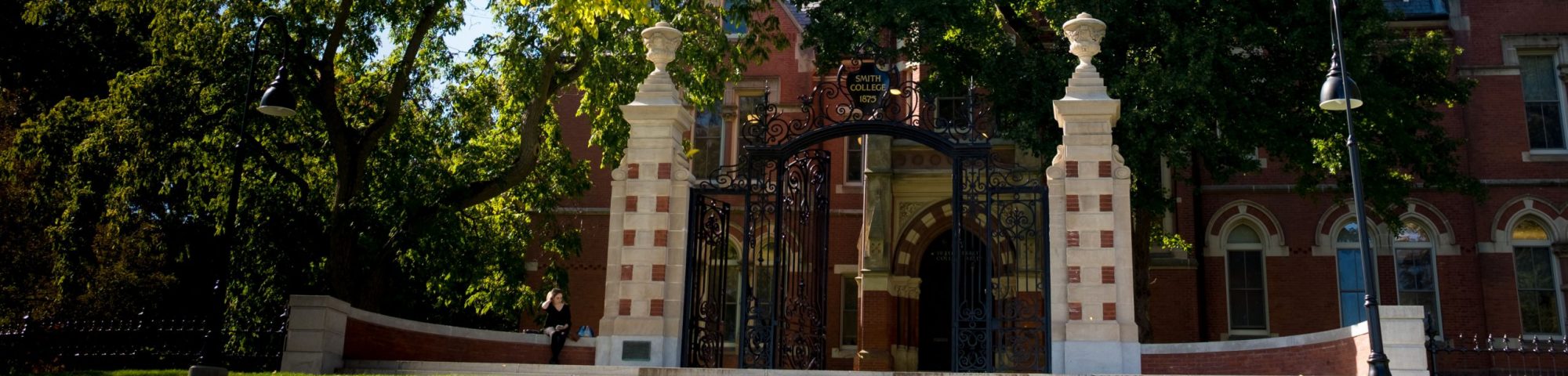
WIMIN 2025 was held at Smith College on Saturday, September 20, 2025.
Our plenary speakers were
- Laura Colmenarejo, North Carolina State University
- Anca Radulescu, SUNY New Paltz
Laura Colmenarejo, North Carolina State University.
Lau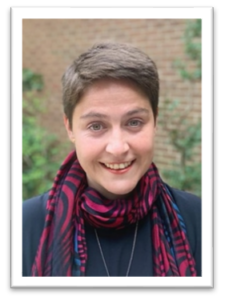 ra Colmenarejo is an Assistant Professor of Mathematics at NCSU. Her research focuses on algebraic combinatorics, symmetric functions and their generalizations, and representation theory of finite groups. She received her PhD at the University of Sevilla (Spain) and has held postdoctoral positions at the Max Planck Institute in Leipzig as well as York University in Canada. She is a lynchpin of a vibrant young research community, and has created or coorganized numerous conferences and workshops, both regional and national, including innovative online programs during COVID. In addition to extensive research work with undergraduates, she has supervised one PhD student and one postdoctoral student, and currently has three more PhD students. Her work with students and junior faculty places a strong emphasis on inclusion and equity, an area in which she has also published.
Title: The total chromatic quasisymmetric functions of a graph
Anca Radulescu, SUNY New Paltz.
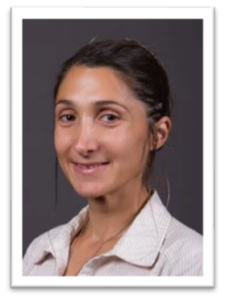
Anca is an Associate Professor of Mathematics at SUNY New Paltz. Her research uses complex dynamics to understand “dynomics,” namely how networks of interacting nodes change and evolve, with a goal of understanding how the global behavior of a dynamic network emerges from the interplay between the network’s connectivity profile and the node-wise dynamics. In addition to theoretical aspects of her work, she applies it to neuroscience, epidemiology (including COVID and Ebola research), medicine (vision pathologies), climate change, and broader environmental issues (lead toxicity). Her work is exceptionally broad: she has held postdoctoral and visiting positions in departments of bioengineering, psychology, applied mathematics, as well as mathematics, and interned at Cold Springs Harbor Laboratory. She received the SUNY Chancellor’s Award for Excellence in Scholarship (system-wide) and her work has been supported by the NSF, the Simons Foundation, the Burroughs Wellcome Fund, and the Mathematical Sciences Research Institute at the University of Berkeley. In addition, she has an extensive record of research projects and collaborations with students.
Title: Dynamics in complex quadratic networks, templates and mutations
Discrete dynamics of single iterated transformations in the complex plane have developed over almost a century into a rich research field. In particular, one of the most studied families has been that of quadratic polynomials. While real quadratic iterations have been associated with cascades of period doubling bifurcations and universality, complex quadratic iterations in the family fc = z2 + c, with c a complex number, provide textbook recipes for creating fractal asymptotic sets. They therefore represent a simple, yet incredibly rich family of examples, both in the context of single map iterations on the real line and in the complex plane.
We explore three novel directions, extending the traditional theory of complex quadratic iterations and providing applications in biology: (1) complex quadratic networks (CQNs); (2) template iterations and (3) mutated iterations. Each direction is built towards addressing in a unified, canonical framework an essential open problem in neuroscience, genetics and medicine, respectively. In all three cases, the system’s long-term dynamics is non-trivial, and can be represented by asymptotic sets (Mandelbrot and Julia sets) with specific topological signatures, and with properties far beyond those described in the case of single map iterations. Understanding the complexity of these sets requires a comprehensive mathematical approach, in which analytical and computational aspects are tightly combined. The central, complex problems generate many satellite problems amenable to undergraduate and graduate students. We will explore some of these problems, and also illustrate applications to neural networks and to open questions in biology.
2025 Schedule
The conference will take place from 9:30am-5:00pm EDT, and begins with coffee and a light breakfast.
Parking Information: After 5 p.m. and before 7 a.m., Monday through Friday and on weekends, visitors may park in the white lined spaces in any lot without a parking pass. We suggest parking in the Dickinson Lot on Green Street or the Parking Garage on West Street. Metered parking is also available on Green Street.
SCHEDULE OF STUDENT TALKS (FINAL)
SCHEDULE
9:30 Registration, Coffee and light breakfast (Campus Center Atrium)
10 Welcome (Campus Center, Carroll Room)
10:05 Morning Plenary Lecture: Anca Radulescu, SUNY New Paltz. (Campus Center, Carroll Room)
11:15 Student talks in parallel sessions (Various Rooms, McConnell Hall)
12:10 (Immediately following student talks) Lunch (Campus Center, Carroll Room)
1:20 Graduate School Panel (Campus Center, Carroll Room)
2:30 Student talks in parallel sessions (Various Rooms, McConnell Hall)
3:25 Coffee break (McConnell Foyer)
4:00 Afternoon Plenary Lecture: Laura Colmenarejo, North Carolina State University. (Campus Center, Carroll Room)