
This page contains the following sections:
- Where is Arabic spoken?
- Climate education in:
- Climate and culture in:
- References and additional resources
Where is Arabic spoken? (أين يتم التحدث باللغة العربية؟)
- Arabic is the fifth most-spoken language, with about 313 million Arabic speakers in the world. There are about 30 regional varieties of Arabic, but there is a standard version that is used in most public and professional institutions. The country with the largest population of Modern Standard Arabic speakers is Egypt at around 65 million speakers, followed by Algeria, Sudan, Iraq, and Saudi Arabia. Outside of the Southwest Asia and Northern Africa regions, there are large Arabic-speaking populations in Europe; Arabic speakers make up about 4% of Belgium’s population, 2.5% of France’s population, and 1.5% of the UK’s population.
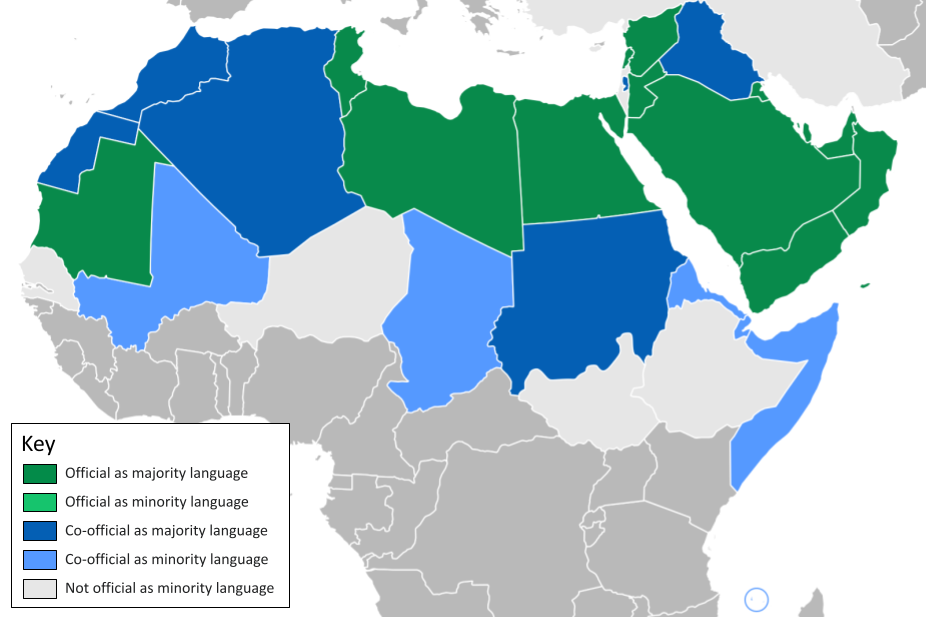
A map of countries in which Arabic is an official language (from Wikimedia Commons, 2008). Arabic is considered a majority language in countries with a population made up of 50% or more Arabic speakers.
Climate education in selected Arabic-speaking countries
(التثقيف المناخي في بلدان مختارة ناطقة باللغة العربية)
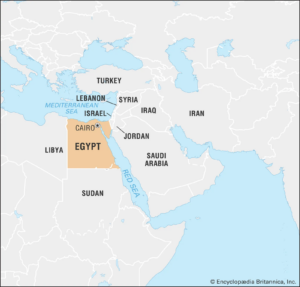
- You can learn more about climate education in Egypt through UNESCO and the Monitoring and Evaluating Climate Communication and Education (MECCE) Project here.
- The greatest climate threats (التهديدات المناخية) to Egypt are extreme temperatures (درجات الحرارة القصوى), sea level rise (ارتفاع مستوى سطح البحر), and land degradation (تدهور الأراضي). These threats affect Egyptian agriculture, economics, and population distribution.
- While Egypt’s average annual temperatures between 1901 and 2013 increased at a rate of 0.1°C (0.18°F) per decade, the temperature rose 0.53°C (0.95°F) from 1993 to 2023. Additionally, climate models from the World Bank predict that areas like South Sinai and Aswan in Egypt will be especially vulnerable to broader rises in global temperatures, warming by 5.12°C (41.2°F) and 5.49°C (41.9°F) by 2100 respectively.
- Heat waves (موجات حر) are a public health problem as well, with global heat-related mortality rates expected to be 47 times greater by 2080. People living in densely populated urban centers like Cairo are more vulnerable to temperature rises due to the urban heat island effect. Urban areas are also warmer due to the widespread use of air conditioning in the desert climate, which increases energy consumption and releases more hot air. Additionally, societal and economic vulnerabilities like gender and class can increase vulnerability to heat; low-income city residents may experience all the negative effects of air conditioning without being able to actually afford an air conditioner (see image below).
- While Egypt’s average annual temperatures between 1901 and 2013 increased at a rate of 0.1°C (0.18°F) per decade, the temperature rose 0.53°C (0.95°F) from 1993 to 2023. Additionally, climate models from the World Bank predict that areas like South Sinai and Aswan in Egypt will be especially vulnerable to broader rises in global temperatures, warming by 5.12°C (41.2°F) and 5.49°C (41.9°F) by 2100 respectively.
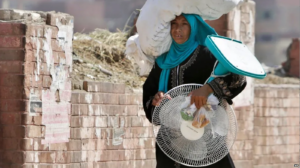
Photo of an Egyptian woman holding an electric fan and a sack on her head and shoulders to shield her from the sun (from the BBC, 2015). Energy consumption in urban areas usually goes up during heat waves due to the use of fans and air conditioners, which makes the temperature higher.
- Agriculture and food production systems (image below) are also negatively affected by rising temperatures; heat stress on crops and livestock has led to reduced crop yields as well as milk and meat production, which seriously impacts food and income sources for rural Egyptians. Atmospheric warming (الاحترار الجوي) changes the intervals in which crops are able to grow, as well as where crops are able to grow.
- Additionally, heat stress also creates a greater demand for water use as well; summer and winter crops like wheat are projected to require more water to cultivate. This is concerning considering that the amount of water in the Nile River lost to evapotranspiration (the processes of evaporation and transpiration) was greater than the amount of water added through precipitation 90% of the time between 2009 and 2019.
- Agriculture and food production systems (image below) are also negatively affected by rising temperatures; heat stress on crops and livestock has led to reduced crop yields as well as milk and meat production, which seriously impacts food and income sources for rural Egyptians. Atmospheric warming (الاحترار الجوي) changes the intervals in which crops are able to grow, as well as where crops are able to grow.
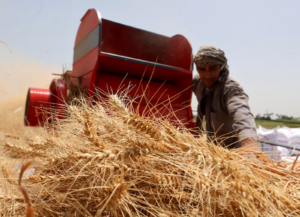
A photo of a farmer harvesting wheat in Al Qalyubia Governorate, located north of Cairo in the Nile Delta region (from Reuters and Abd El Ghany, 2023).
- Climate change (تغيّر المناخ) has also made Egypt’s rainfall (كمية المطر) more unpredictable; from 1993 to 2023, Egypt’s total annual precipitation decreased by about 22%, and if current trends continue Egypt’s annual rainfall could decrease by 2.9 millimeters (0.11 in) by 2100. Changes in rainfall patterns are especially impactful in Egypt because its climate is naturally hot and dry.
- Droughts (جفافات) are also expected to become longer and more frequent in Egypt, with dry spells projected to last up to 75 days by the 2080s. This is due to a decrease in precipitation and increase in heat leading to greater surface water evaporation and less groundwater replenishing.
- Sea level rise poses a significant threat to Egypt due to the country’s low-lying coasts. Egypt’s most vulnerable coast is bordering the Mediterranean Sea, which is projected to rise by at least 22 cm (8.66 in) by 2100. This is concerning because 2.4% of the country is classified as a Low-Elevation Coastal Zone (LECZ), meaning that it’s lower than 10 m (32.8 ft) below present-day sea level.
- Sea level rise would also greatly impact Egypt’s industrial and agricultural capacity, since 50% of the Egyptian industrial sector and 40% of Egyptian agriculture is located in coastal cities like Alexandria (image below). The Egyptian government even projected in the 2023 update of its First Nationally Determined Contribution that food production from the Nile Delta region (which is where 60% of Egypt’s food production comes from) will decrease by at least 30% by 2030. Saltwater intrusion (saltwater infiltrating freshwater aquifers) and subsequent increases in soil salinity will also negatively impact Egyptian agriculture.
- Egypt’s coasts are subsiding, or sinking, as well; the Nile Delta is expected to sink 1-5 mm (0.05-0.20 in) to 3.7-8.4 mm (0.15-0.33 in) per year, and Alexandria is already sinking at 1.6 mm (0.06 in) per year. This is exacerbating the impact of sea level rise due to global warming.
- Climate change (تغيّر المناخ) has also made Egypt’s rainfall (كمية المطر) more unpredictable; from 1993 to 2023, Egypt’s total annual precipitation decreased by about 22%, and if current trends continue Egypt’s annual rainfall could decrease by 2.9 millimeters (0.11 in) by 2100. Changes in rainfall patterns are especially impactful in Egypt because its climate is naturally hot and dry.
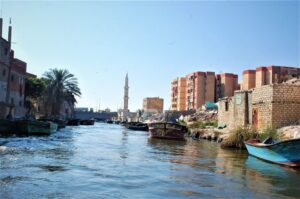
A photo of a street in El Max, a neighborhood in the coastal city of Alexandria that has been experiencing heavy flooding since 2015. In response to the initial floods in 2015, the Egyptian government decided to widen the canals of the neighborhood, making it necessary to relocate the residents of El Max to higher-height housing in 20 (from Bloomberg, 2019).
- An Egyptian survey conducted by Baseera (The Egyptian Center for Public Opinion Research) in 2022 found that only 65% of Egyptians had heard of the term “climate change” (تغيّر المناخ). While most respondents understood that the weather, agricultural systems, and water resources were changing, the way they explained those changes did not involve climate change. However, another 2022 survey from the European Investment Bank suggested that 92% of Egyptian respondents said that climate change was already affecting their day-to-day lives.
- Climate change education (CCE) in Egypt has consistently been emphasized in national educational policies. For example, the 2011 National Strategy for Adaptation to Climate Change and Disaster Risk Reduction calls for integrating information about climate change risks into curriculum at all levels, as does Egypt’s 1st Nationally Determined Contributions (a document meant to summarize the goals Egypt wants to accomplish (and how they will accomplish them) in order to reach the goals set by the 2015 Paris Agreement).
- Most Egyptian CCE programs focus on building skills to mitigate the effects of climate change on the environment, economy, and human health.
- One policy with these goals is the 2011 National Strategy for Mainstreaming Gender in Climate Change, which recommends developing training and education for women and girls in climate-vulnerable communities on how to recognize the effects of climate change, including climate-change related diseases.
- Another policy with a similar philosophy is the 2015 National Action Plan for Sustainable Consumption and Production, which sought to integrate concepts like the green economy as well as sustainable consumption and production into school curricula.
- Most Egyptian CCE programs focus on building skills to mitigate the effects of climate change on the environment, economy, and human health.
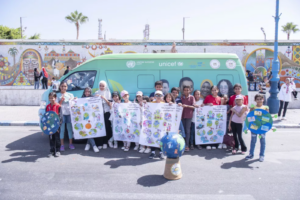
A photo of children holding posters about sustainability in front of a UNICEF “Youth for Climate” Climate Caravan (from UNICEF and Emad, 2022).
- Other departments of the Egyptian government (for example, Department of Youth and Sports and the Ministry of Environment) have created initiatives along with international organizations such as UNICEF for climate change education, including the “Youth for Climate” Caravan that brought a group of young people across the country to facilitate events and activities to raise awareness and engage youth in climate advocacy (image above).
Jordan (المملكة الأردنية الهاشمية)
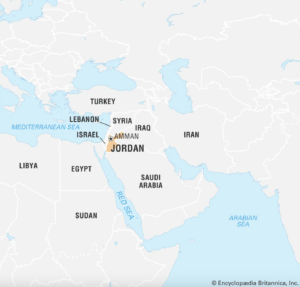
Map of Jordan, in the Levant (Eastern Mediterranean) region of Southwest Asia (from Encyclopædia Britannica).
- You can learn more about climate education in Jordan through UNESCO and the Monitoring and Evaluating Climate Communication and Education (MECCE) Project here.
- Jordan’s greatest climate threat is irregular precipitation (الهطول غير المنتظم) and the droughts that result from it, which greatly affects Jordanian agriculture and public health.
- From 1980-2015 there has been a decline in Jordan’s mean annual precipitation, with drought magnitude and frequency increasing. Estimates of the decrease in Jordan’s annual precipitation by 2040-2060 range from 5 to 15%.
- Additionally, droughts are projected to intensify even more as precipitation decreases and temperature increases, which is especially worrying since Jordan is one of the most water scarce nations in the world. Jordan’s water availability is 400 m³ (14126 ft³) below the global benchmark of absolute water scarcity (ندرة المياه). In 2022, the International Water Management Institute (IWMI) estimated that 40% of Jordan’s groundwater basins will be severely depleted by 2030, and the effects of climate change on water availability in the country are being felt greatly (image below).
- From 1980-2015 there has been a decline in Jordan’s mean annual precipitation, with drought magnitude and frequency increasing. Estimates of the decrease in Jordan’s annual precipitation by 2040-2060 range from 5 to 15%.
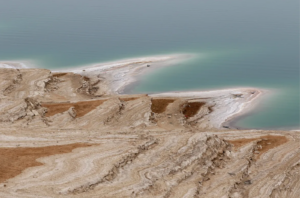
An aerial photo of the Dead Sea in Jordan during a severe drought in 2021 (from Mazraawi and Al Jazzera, 2021). The rainy season that year was 60% of the normal rainfall, so the shorelines of the Dead Sea dropped significantly.
- Jordanian agriculture is seriously threatened by climate change. Rising temperatures, irregular rainfall, and extreme weather events (الظواهر الجوية المتطرفة) like droughts and floods (فيضانات) are all contributing to a reduction in crop yield (see image below). Additionally, staple crops like barley and wheat are highly sensitive to temperature increases, so their yield is decreased even further. The escalating scarcity of water in Jordan is also decreasing the amount of water being allocated for agriculture and irrigation, which will also contribute to crop failures. Droughts are also projected to affect livestock production, reducing the amount of pasture for cattle to graze on and increasing the frequency of deadly livestock diseases like toxoplasmosis, an infection caused by a single-celled bacteria whose range increases with rising temperatures.
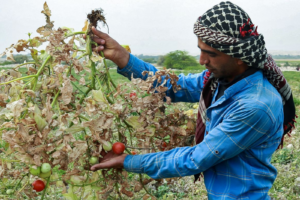
A photo of a farmer showing his tomato crop, which was significantly smaller in yield and size due to a drought in 2021 (from Mazraawi and Al Jazeera, 2021).
- However, the effects of climate change on agriculture in Jordan go beyond just crop yield. The livelihoods of many rural Jordanians depend on the agriculture sector, with half of those working in Jordan’s agriculture sector are rural women. Livestock production also contributes 58% of Jordan’s agricultural Gross Domestic Product (GDP) revenue and provides income for a quarter of a million Jordanians.
- Water scarcity and temperature rise due to climate change also poses a threat to Jordan’s public health; lack of water could force people to use contaminated water for cooking and cleaning, leading to water and food borne diseases spreading, and hotter temperatures could increase the geographic range and transmission seasons of vector-borne diseases (diseases that spread between animals and humans), as well as malnutrition from declining agricultural systems.
- In the 2023 International Public Opinion of Climate Change Poll by Yale Program on Climate Change Communication, 83% of Jordanian respondents agreed that climate change is happening. Additionally, according to a 2023 survey from the European Investment Bank, 81% of Jordanians say that climate change is affecting their everyday life and 55% of the population believes that climate change and environmental damage are affecting their income.
- Climate change issues are integrated into Jordan’s education system in different ways and at different levels. The 2019 Climate Change Bylaw n.79 requires the Ministry of Education to include concepts connected to climate change in both the curriculum for students and training for teachers. Several other policies like the National Climate Change Policy of the Hashemite Kingdom of Jordan 2013-2020 and the Ministry of Environment Strategic Plan 2020-2022 emphasize the importance of providing environmental education (التعليم البيئي) in order to promote green growth and sustainable development (التنمية المستدامة).
- A wide range of issues related to climate change are included in Jordan’s formal education system, ranging from units about preserving natural resources like water in Grade 4 to more in depth discussions of water scarcity in Grade 11.
- Students are also given ways to engage with environmental topics outside of school. For example, in 2017 a school in the Liwae Bani Oubaid Directorate of Education held a competition where students were encouraged to draw and write about environmental challenges. Other extracurricular CCE opportunities include practical sessions about environmental preservation (المحافظة على البيئة) strategies, cleaning up litter, and planting vegetation.
- The Foundation for Environmental Education designed a “Eco-Schools” program which aims to help students take initiative in movement towards sustainability (الاستدامة) through engagement in environmental activities (image below). This program was initiated at 15 Jordanian schools in 2009, and is now being facilitated by the Royal Marine Conservatory of Jordan (JREDS) with more than 200 schools participating.
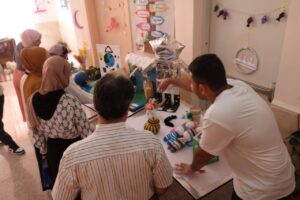
A photo of art projects made by students participating in the JREDS Eco-School program, centered on topics like sustainability (from Royal Marine Conservatory of Jordan, 2019).
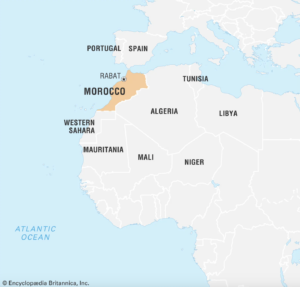
Map of Morocco, in Northwest Africa, on the shores of the Mediterranean Sea and the Atlantic Ocean (from Encyclopædia Britannica).
- You can learn more about climate education in Morocco through UNESCO and the Monitoring and Evaluating Climate Communication and Education (MECCE) Project here.
- The climate threats Morocco faces include heatwaves, droughts, desertification (تصحر), and shoreline erosion (تاكل الخط الساحل). As a result of these threats, Morocco also has to tackle the issues of water scarcity, food insecurity (انعدام الأمن الغذائي), and climate migration (الهجرة المناخية).
- In 2023, Morocco experienced an unexpected spring heat wave where temperatures ranged from 37 to 45°C (98.6 to 113°F), exceeding the seasonal average by 5 to 13°C (9 to 23.4°F). The high temperatures were brought by a hot and dry southeastern air current that originated in the Sahara Desert. However, the winter before the heat wave was much drier than normal, and the annual rainfall in Morocco was in decline for the previous 5 years leading up to 2023.
- Rising temperatures and lack of consistent rainfall have contributed to diminishing water resources in Morocco. In 2023 the Moroccan government reported that Moroccan dam reservoirs were filled to a third of their capacity. The little amount of rain that falls on the country is mostly lost to river runoff and washed away to the sea. These developments have had a significant impact on the availability of Morocco’s water resources; from 1960 to 2020, the per capita availability of renewable water sources decreased from 2560 m³ to about 620 m³ (90405 ft³ to 21895 ft³) per person annually. This decrease has put Morocco in a state of structural water stress (below 1000 m³ (35315 ft³) per person per year) and close to the absolute water scarcity, 500 m³ (17657ft³).
- In 2023, Morocco experienced an unexpected spring heat wave where temperatures ranged from 37 to 45°C (98.6 to 113°F), exceeding the seasonal average by 5 to 13°C (9 to 23.4°F). The high temperatures were brought by a hot and dry southeastern air current that originated in the Sahara Desert. However, the winter before the heat wave was much drier than normal, and the annual rainfall in Morocco was in decline for the previous 5 years leading up to 2023.
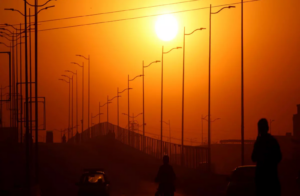
A photo of a road in Morocco during a heat wave in July 2024 (from Maghrebi.org, 2024).
- Oasis habitats in Morocco are threatened by climate change as well, as rising temperatures, decreasing rainfall, and increasing desertification have weakened the water sources oases are based around. About two thirds of Morocco’s oasis habitats have vanished over the past century, and this process has only been accelerated by rising temperatures. This is especially concerning, considering that over 2 million Moroccans live and farm in the oasis zone in the south of the country. Additionally, the variety and quality of crops has declined as droughts intensify, which puts pressure on food sources and increases food insecurity.
- In response to these disruptions, farmers in oasis communities have returned to traditional methods of irrigation, which conserve enough water for drinking and watering crops like dates. Another strategy adopted by some communities is cultivating more climate-resilient medicinal and aromatic plants like basil and rosemary, instead of grains like wheat and barley.
- Oasis habitats in Morocco are threatened by climate change as well, as rising temperatures, decreasing rainfall, and increasing desertification have weakened the water sources oases are based around. About two thirds of Morocco’s oasis habitats have vanished over the past century, and this process has only been accelerated by rising temperatures. This is especially concerning, considering that over 2 million Moroccans live and farm in the oasis zone in the south of the country. Additionally, the variety and quality of crops has declined as droughts intensify, which puts pressure on food sources and increases food insecurity.
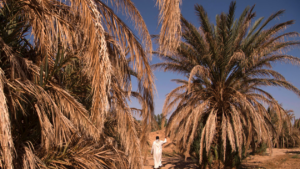
A photo of dried-out palm trees in the Tafilalet oasis in Morocco (Yale Environment 360, 2016).
- Climate migration is another facet of Morocco’s climate crisis. According to the World Bank, 80% of Morocco’s most vulnerable population lives in rural areas that are primarily dependent on agriculture irrigated by rainfall for their food and income. Additionally, 65% of Morocco’s total population, as well as 90% of its industry, is based on Morocco’s coast—which leaves them at risk of being affected by sea level rise and coastal flooding. Because of these factors, the World Bank estimates that up to 1.9 million Moroccans will migrate from rural to urban areas by 2050.
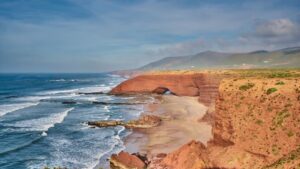
A photo of an eroding coastline in the Maghreb region, which encompasses Morocco, Algeria, Libya, Mauritania, and Tunisia (from World Bank, 2021).
- According to a 2022 survey conducted by the European Investment Bank, 86% of Moroccan respondents agreed that “climate change was affecting their everyday life” and 51% believed that climate change and/or environmental damage impacted their livelihoods in some way.
- There is no law or policy that specifically provides for the implementation of climate change education in Morocco, but there is a focus on environmental education, especially for sustainable development, in Moroccan education.
- The most notable piece of legislation relating to climate change education in Morocco is the 2014 Law Framework 99-12 on the National Charter for Environment and Sustainable Development, which set objectives for the state to carry out environmental protection (حماية البيئة) and sustainable development. Articles 17, 22, and 32 all state the importance of environmental education in promoting and influencing personal and collective behaviors that protect the environment and nurture sustainable development.
- The National Curriculum Framework is an eight part text that sets guidelines for the Moroccan education system, as well as the end goals of school curricula every education cycle. Three out of the eight parts recommend integrating environmental issues like climate change into lessons, particularly in primary and secondary education.
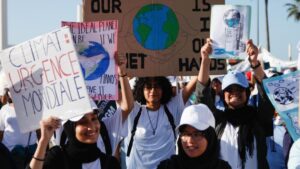
A photo of youth climate activists protesting in Casablanca, Morocco in September 2019 (from Al-Monitor, 2019).
- Organizations like Youth For Climate Morocco have also contributed to climate change education and youth empowerment in the country, organizing workshops and awareness campaigns, and participating in national and international climate conferences. One notable project is their School of Climate project, a three-part program of workshops, discussion panels, and hands-on training meant to impart the fundamentals of climate science and climate change onto youth, as well as to enable them to find sustainable solutions to climate issues (قضايا المناخ) and push for environmentally conscious policies.

A photo of a discussion panel about possibilities for sustainable development organized by Youth for Climate Morocco (Youth for Climate Morocco, 2023).
Climate and culture in selected Arabic speaking countries
- Egyptian cultural heritage sites like the Great Pyramids and the Great Sphinx of Giza (image below), the Luxor Temple, and the Citadel of Qaitbay are endangered by the stronger winds and humidity (رطب), higher temperatures, and more extreme rainfall and floods caused by climate change. Cultural heritage sites like the Citadel of Qaitbay are built into the coast of Egypt, which puts it at risk of getting damaged by coastal erosion (تآكل السواحل), which is exacerbated by sea level rise.
- The national Egyptian government has enacted several initiatives to protect cultural heritage sites from climate threats. Thousands of concrete blocks were deposited around the Citadel of Qaitbay to protect it from rising sea levels, tasking teams of archaeologists to try to restore or even rebuild monuments–but the process of restoration and protection is difficult and costly.
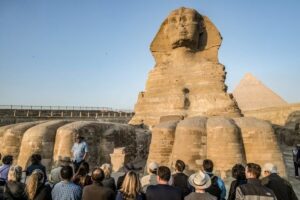
A photo of a crowd gathered around the Great Sphinx of Giza, one of many cultural heritage sites in Egypt that is threatened by climate change (from Arab News, 2019).
- Koshary is an extremely popular dish in Egypt that contains rice, vermicelli, and brown lentils topped with chickpeas, tomato sauce, fried onions, and garlic vinegar (image below). It originated from an Indian meal, khichdi, that the British administration used to feed Indian troops while they were occupying Egypt in the 1800s. Egyptians incorporated onions, tomato sauce, and vinegar into this traditional dish, and pasta was later added in the 1940s by Italian immigrants. Koshary was initially served by vendors on the street, but now restaurants specializing in koshary are relatively common. It is considered to be a cheap and comforting food, favored by laborers and was even served during the 2010 Arab Spring protests (a series of anti-government uprisings across the Arab world).
- Rice production in the Nile Delta region is endangered by climate change. The delta shoreline of the Nile River is receding by approximately 18 m (60 ft) per year, and climate change is projected to increase the average variations of the Nile’s flow by about half of its current value, which means that the difference between Nile’s minimum and maximum flow would be larger. This indicates greater risk of flooding and drought. Due to these threats to the water security of the Nile, the Egyptian government reduced the production of water-intensive crops, even high-necessity staple crops like rice. In January 2018, the total area for rice cultivation decreased by 31%.

A photo of koshary, which is considered to be the national dish of Egypt (from National Public Radio, 2017). Some of the ingredients needed to make koshary, like rice, are harder to produce in Egypt as climate change threatens the water security of the Nile.
- The annual olive harvest in Jordan is a very important event because of its historical and cultural significance (image below). Olives have been cultivated in Jordan since 5400 BC, and many cultural values are tied to taking care of the olive trees. In one Jordanian story, a king asks an old man why he plants olive trees, since he won’t live to eat from them. The old man replies, “They planted and we ate, so we’ll plant so they’ll eat.” Olive trees take about 10 to 15 years to become productive, but can bear fruit for hundreds, even thousands of years. This story not only highlights the longevity of the olive tree, but also the principle of sustainability; your actions ensure that future generations can have what you had. Additionally, the olive harvest was significant because it brought communities together. Men and women would harvest in the olive groves together, singing traditional songs. Special occasions like weddings were traditionally scheduled after the olive harvest because many people relied on it for their income.
- Olive trees are hardy and resilient plants, but disruptions in temperature and precipitation caused by climate change place serious stress on olive producers. The Intergovernmental Panel on Climate Change categorized the Mediterranean Basin as a “climate change hotspot”, based on projections of rising temperatures and drying in the region. This does not bode well for olive production, since olive trees have an optimal annual average temperature for blooming of about 17°C (62°F), and the quality and quantity of olives being produced is highly dependent on temperature.
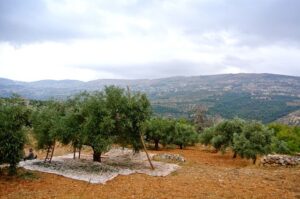
A photo of olive groves in Ajloun, a mountainous region in Jordan known for its olives (from Devour Blog, 2012).
- “Bedouin” is a term used to describe different groups of people across the Arab world who are associated with a nomadic or pastoral lifestyle based around the tending of livestock. There are many Bedouin communities in Jordan that are nomadic to varying degrees, but they all tend livestock: camels, horses, sheep, and cattle. Bedouin groups have to factor in climatic conditions when deciding where and when to migrate livestock. For example, in the Wadi Faynan area (a seasonal river valley in southern Jordan), most Bedouin will move up to the regional highlands during the summer months because of lower temperatures at greater elevation, and then move back to the river valley in the rainy winter months for their cattle to graze on the lush vegetation and to take shelter against the especially windy winter storms.
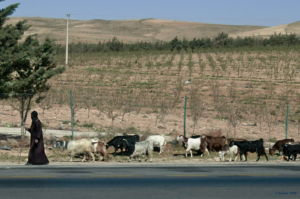
A photo of a Bedouin man herding goats along the road (from Greatest Paka Photography, 2012). Climate change has shifted the climatic conditions that Bedouin herders have to consider when moving their livestock.
- Sefrou is a city in northern Morocco known for its annual Cherry Festival, which was added to the UNESCO list of Representative List of the Intangible Cultural Heritage of Humanity (image below). The festival celebrates the natural and cultural beauty of the region, represented by the cherry fruit. An important festival tradition is the pageant for the year’s Cherry Queen, who hands out cherries to onlookers during a parade later in the festival. Local musicians, dancers, craftsmen, and fruit farmers all contribute to the festivities.
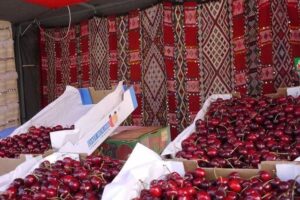
A photo of cherries on display at the Sefrou Cherry Festival (from the Sefrou Museum, 2021).
- Another seasonal festival in Morocco is the Almond Blossom Festival in Tafraout, which is the largest producer of almonds in Morocco (image below). The festival celebrates the blossoming of the almond trees in the spring and the prosperous new harvest, as well as the unity of the local community. Traditional songs and dances are performed, and many dishes made with almonds like amlou (a mix of almonds, argan oil and olive oil eaten with bread) are served.
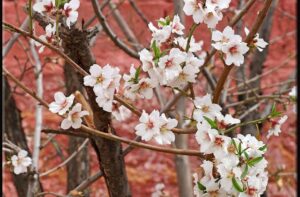
A photo of almond blossoms, taken during the annual Almond Blossom Festival in Tafraout (from moroccopedia.com, 2022).
- Maghrebi or Moroccan mint tea plays an important role in Moroccan hospitality and culture. The tea is made with gunpowder green tea (green tea leaves rolled into small pellets), spearmint leaves, and sugar, and is prepared in many steps. Mint tea is integral to socializing in Morocco; it is traditionally offered to guests in Moroccan households as a sign of hospitality, brings people together at casual gatherings and celebrations, and serves as a symbol of the multicultural aspect of Moroccan national identity.
- The global tea industry is threatened by climate change: droughts, irregular precipitation, and rising temperatures have been negatively impacting tea harvests and may begin to shrink the amount of land suitable for growing tea leaves. A 2021 report from the Ethical Tea Partnership projected that China, where gunpowder green tea is grown and prepared, would experience a reduction of optimal tea growing regions by 4.7% by 2050. This reduction may be even greater for gunpowder tea because it is specifically grown in either Zhejiang province in China or near Keelung City in Taiwan. This does not bode well for Morocco, since they are very reliant on green tea imports from China.
- Mint is also especially vulnerable to changes in climate, since it has a short growing period and grows within 41 degrees north and south of the equator. It is also sensitive to changes in precipitation and temperature to a lesser extent. A study conducted by the Colgate-Palmolive Company and MIT Sloan Sustainability Lab assessed possible impacts climate change may have on mint production and concluded that the availability, quality, and cost of mint would be negatively affected by rising temperatures, water availability, extreme weather events, and shrinkage of viable growing regions. These issues could affect Morocco by lowering the availability of mint tea for social occasions.

A photo of a traditional Moroccan tea set, complete with cups full of mint tea (from moroccopedia.com). Mint only grows 41 degrees north and south of the equator and has a short growing period, which makes it vulnerable to changes in climate, particularly temperatures and water availability.
References and additional resources
- Bahadi, A. “Almond Blossom Festival – Tafraoute.” Morocco Travel, 4 Sept. 2022, www.moroccopedia.com/almond-blossom-festival-tafraoute/.
- Bouknight, S. “Young Moroccan Activists Rally for Climate Action.” Al-Monitor, 1 Oct. 2019, www.al-monitor.com/originals/2019/10/morocco-rally-climate-change.html.
- Bouknight, S. “Young Moroccan Activists Rally for Climate Action.” Al-Monitor, 1 Oct. 2019, www.al-monitor.com/originals/2019/10/morocco-rally-climate-change.html.
- Bryce, E. “A Drive to Save Saharan Oases as Climate Change Takes a Toll.” Yale E360, 12 Dec. 2016, e360.yale.edu/features/a_drive_to_save_sahran_oases_as_climate_change_takes_a_toll_cop22.
- “CCE Country Profile: Egypt.” MECCE, 1 Mar. 2024, mecce.ca/country_profiles/cce-country-profile-egypt/.
- “CCE Country Profile: Jordan.” MECCE, 1 Mar. 2024, mecce.ca/country_profiles/cce-country-profile-jordan/.
- “CCE Country Profile: Morocco.” MECCE, 1 Mar. 2024, mecce.ca/country_profiles/cce-country-profile-morocco/.
- “Celebrating the Community: Sefrou’s Cherry Festival.” Sefrou Museum Blog, 16 Sept. 2021, blog.sefroumuseum.org/index.php/2021/04/14/celebrating-the-community-sefrous-cherry-festival/.
- “Climate Change.” UNICEF Egypt, www.unicef.org/egypt/climate-change.
- “Climate Education School.” Youth4Climate, 8 Nov. 2023, youth4climatema.org/hello-world/.
- Doochin, D. “How Many People Speak Arabic around the World, and Where?” Babbel Magazine, Babbel, 25 Jan. 2019, www.babbel.com/en/magazine/how-many-people-speak-arabic.
- “Egypt Heatwave Leaves 61 People Dead.” BBC News, BBC, 12 Aug. 2015, www.bbc.com/news/world-middle-east-33886557.
- “Eib Climate Survey: 81% of Jordanian Respondents Say Climate Change Is Already Affecting Their Everyday Life.” European Investment Bank, European Investment Bank, 16 Jan. 2023, www.eib.org/en/press/all/2023-008-81-of-jordanian-respondents-say-climate-change-is-already-affecting-their-everyday-life.
- “EIB Climate Survey: 86% of Moroccan Respondents Say Climate Change Is Already Affecting Their Everyday Life.” European Investment Bank, European Investment Bank, 20 Dec. 2022, www.eib.org/en/press/all/2022-560-86-of-moroccan-respondents-say-climate-change-is-already-affecting-their-everyday-life.
- EIB Climate Survey: 92% of Egyptian Respondents Say Climate Change Is Already Affecting Their Everyday Life, European Investment Bank, 20 Dec. 2022, www.eib.org/en/press/all/2022-557-92-of-egyptian-respondents-say-climate-change-is-already-affecting-their-everyday-lifee%20prioritised.
- El Safty, S, and M El Dahan. “Exclusive: UAE Agribusiness in Talks to Acquire Land in Egypt, Sources Say | Reuters.” Reuters, 29 Oct. 2023, www.reuters.com/markets/commodities/uae-agribusiness-talks-acquire-land-egypt-sources-2023-10-17/.
- El-Rayes, S. “Dry Winters and Scorching Springs: Climate Change in Morocco.” Carnegie Endowment for International Peace, 22 June 2023, carnegieendowment.org/sada/2023/06/dry-winters-and-scorching-springs-climate-change-in-morocco?lang=en.
- Gopal, S. “On the Streets of Cairo, I Fed My Love for Koshari.” BostonGlobe.Com, The Boston Globe, 10 Oct. 2023, www.bostonglobe.com/2023/10/10/lifestyle/streets-cairo-i-fed-my-love-koshari/.
- Haddad, R. “The Threat of Climate Change in Jordan – Carnegie Endowment for International Peace.” Carnegie Endowment for International Peace, 27 Apr. 2023, carnegieendowment.org/sada/89628.
- Hamzawy, A, et al. “Climate Change in Egypt: Opportunities and Obstacles – Carnegie Endowment for International Peace.” Carnegie Endowment for International Peace, 26 Oct. 2023, carnegieendowment.org/2023/10/26/climate-change-in-egypt-opportunities-and-obstacles-pub-90854.
- “Jordan facing ‘one of the most severe’ droughts in its history.” Al Jazeera, 6 May 2021, https://www.aljazeera.com/gallery/2021/5/6/drought-hit-jordan-critical-as-water-sources-dry-up
- Jordan Red Crescent Climate Center. Red Cross Red Crescent, 2022, Jordan, https://www.climatecentre.org/wp-content/uploads/RCCC-Country-profiles-Jordan-2022-Final-1.pdf.
- Kaniewski, D, et al. “Climate change threatens olive oil production in the Levant.” Nature Plants, vol. 9, no. 2, 26 Jan. 2023, pp. 219–227, https://doi.org/10.1038/s41477-022-01339-z.
- Kasraoui, S. “Agriculture: Morocco Witnesses 54% Decrease in Rainfall Precipitation.” Https://Www.Moroccoworldnews.Com/, 16 Jan. 2024, www.moroccoworldnews.com/2024/01/360164/agriculture-morocco-witnesses-54-decrease-in-rainfall-precipitation.
- Khafagy, A. “Will Sea-Level Rise Claim Egypt’s Second-Largest City?” Bloomberg.Com, Bloomberg, 23 Aug. 2019, www.bloomberg.com/news/articles/2019-08-22/will-egypt-s-ancient-city-succumb-to-rising-seas.
- Lee, T. “Oriental Institute Restores Ancient Egyptian Monuments Threatened by Climate Change.” PreventionWeb, 23 Feb. 2023, www.preventionweb.net/news/oriental-institute-restores-ancient-egyptian-monuments-threatened-climate-change.
- Leiserowitz, A, et al. Yale Program on Climate Change Communication and Data for Good at Meta, New Haven, CT, 2023, International Public Opinion on Climate Change 2023.
- Loy, P. Arabic speaking world. 27 May 2008. Wikimedia Commons, https://commons.wikimedia.org/wiki/File:Arabic_speaking_world.svg.
- Masaiti, A. “New Heat Wave Expected in Several Moroccan Provinces.” HESPRESS English – Morocco News, 10 Aug. 2022, en.hespress.com/47271-new-heat-wave-expected-in-several-moroccan-provinces.html.
- Mohammed, N, et al. “Navigating Climate Challenges in Morocco: Africa’s First Comprehensive Climate Risk Analysis for the Banking Sector.” World Bank Blogs, 16 Apr. 2024, blogs.worldbank.org/en/arabvoices/navigating-climate-challenges-in-morocco-africas-first-comprehensive-climate-risk-analysis-for-the-banking-sector.
- “Moroccan Tea Culture.” Morocco Travel, 16 Oct. 2023, www.moroccopedia.com/moroccan-tea-culture/.
- “Morocco Country Climate Development Report: An Example in Parliamentary Engagement.” World Bank, World Bank Group, 10 Mar. 2023, www.worldbank.org/en/news/feature/2023/03/10/morocco-country-climate-development-report-an-example-in-parliamentary-engagement.
- Mowbray, S. “Climate Change Brews Trouble for Tea Industry, but Circular Solutions Await.” Mongabay Environmental News, 14 Mar. 2024, news.mongabay.com/2024/03/climate-change-brews-trouble-for-tea-industry-but-circular-solutions-await/.
- “Olive Picking in Ajloun, Jordan.” Devour Blog, 22 Nov. 2012, devourblog.blogspot.com/2012/11/olive-picking-in-ajloun-jordan.html.
- “Photos: Jordan in the Grip of ‘severe’ Drought.” Al Jazeera, Al Jazeera, 6 May 2021, www.aljazeera.com/gallery/2021/5/6/drought-hit-jordan-critical-as-water-sources-dry-up.
- Rawashdeh, S. “Nomadic Traditions, Modern Realities – Exploring Bedouin Culture.” Jordan Times, 31 Mar. 2024, jordantimes.com/news/local/nomadic-traditions-modern-realities-%E2%80%94-exploring-bedouin-culture.
- Reader, E. Bedouin Shepherd in Jordan. 8 Apr. 2008. Greatest Paka Photography, https://www.flickr.com/photos/greatestpaka/6988459664/.
- Reuters. “Egypt’s ‘History of Humanity’ Monuments Face Climate Change Threat | Arab News.” Arab News, 20 Dec. 2019, www.arabnews.com/node/1601641/middle-east.
- Robertson, A. “Egypt’s Beloved Koshary Is a Modern Mystery in an Ancient Cuisine.” NPR, NPR, 22 Feb. 2017, www.npr.org/sections/thesalt/2017/02/22/512920687/egypts-beloved-koshary-is-a-modern-mystery-in-an-ancient-cuisine.
- Schaefer, S. “Climate Change: The Nile River.” Middle East Policy Council , 20 Mar. 2024, mepc.org/commentaries/climate-change-nile-river/.
- Surls, H. “‘I Was Raised under the Trees’: Olive Harvest in Jordan.” Anthrow Circus, 12 Feb. 2024, anthrowcircus.com/i-was-raised-under-the-trees-olive-harvest-in-jordan.
- “Sustainable Development -ECO Schools Program.” Jordan Royal Marine Conservatory, 2019, www.jreds.org/en-us/Sustainable-development-Eco-Schools-program.
- “UNESCO – Cherry Festival in Sefrou.” Intangible Cultural Heritage, 2012, ich.unesco.org/en/RL/cherry-festival-in-sefrou-00641.
- “World Bank Climate Change Knowledge Portal.” Summary | Climate Change Knowledge Portal, climateknowledgeportal.worldbank.org/country/jordan.
- Yalcin, S. “Disappearing Coasts in the Maghreb: Coastal Erosion and Its Costs.” World Bank, 28 Sept. 2021, www.worldbank.org/en/country/morocco/publication/disappearing-coasts-in-the-maghreb-coastal-erosion-and-its-costs.
- Zayed, D. “On the Margins: Civil Society Activism and Climate Change in Egypt – Carnegie Endowment for International Peace.” Carnegie Endowment for International Peace, 2 May 2024, carnegieendowment.org/2024/05/02/on-margins-civil-society-activism-and-climate-change-in-egypt-pub-92347.
- Zeynalova, F. “Sharing a Family Dinner among the Olive Groves of Jordan.” National Geographic, 17 Apr. 2024, www.nationalgeographic.com/travel/article/culinary-traditions-ajloun-jordan.
- “‘Youth for Climate’ Caravan, a National Initiative Putting Youth at the Forefront of Climate Action.” UNICEF, 4 Sept. 2022, www.unicef.org/egypt/press-releases/youth-climate-caravan-national-initiative-putting-youth-forefront-climate-action.
How to cite this page
Arabic. (2025, July 29). Climate in Global Cultures and Histories: Promoting Climate Literacy Across Disciplines Retrieved Month Date, Year, from https://www.science.smith.edu/climatelit/arabic/.